

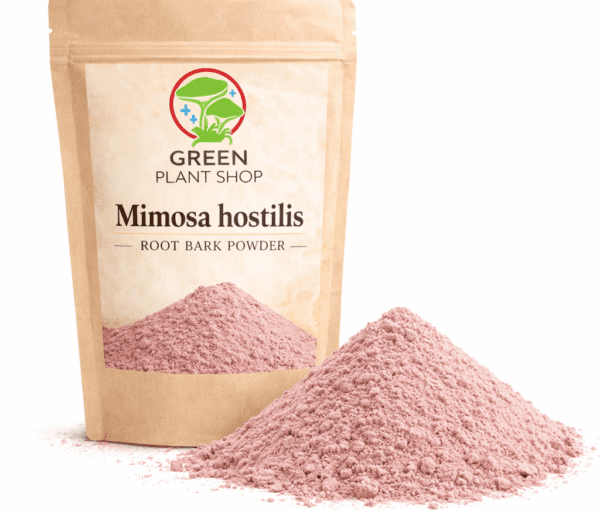
For people discovering botanical materials for the first time, Mimosa Hostilis Root Bark can be an interesting subject to research. It comes from Mimosa tenuiflora, a plant native to parts of South America and particularly associated with northeastern Brazil. The species has a long history of traditional use and has also attracted attention from botanists, ethnobotanical researchers, and people interested in natural plant materials.
Before learning about the product itself, beginners should understand its botanical identity, traditional background, characteristics, potential uses, quality considerations, and legal status. This guide provides an introductory overview without making unsupported health claims or recommending potentially unsafe applications.
What Is Mimosa Hostilis Root Bark?
Mimosa Hostilis Root Bark is the bark obtained from the roots of Mimosa tenuiflora. The plant has historically been known by the scientific name Mimosa hostilis, which is why the older name remains common in commercial and online discussions.
The plant is a thorny shrub or small tree that can survive in relatively dry environments. Its natural distribution includes areas of northeastern Brazil and other parts of Latin America.
The bark may be sold in different physical forms, including larger pieces, smaller chips, or finely processed botanical material. Its color can range from reddish brown to darker brown depending on the age of the material, processing methods, and storage conditions.
A Brief Botanical Background
Mimosa tenuiflora belongs to the Fabaceae family, the large plant family that includes beans, peas, and many other species.
The plant has several recognizable characteristics. It generally has small leaves, thorny branches, light-colored flowers, and a strong root system. Its ability to grow under challenging environmental conditions has made it an important species in certain dry landscapes.
For beginners, understanding the plant’s scientific identity is particularly important because common names can sometimes be confusing. When researching botanical products, checking the scientific name can help distinguish the intended species from plants with similar common names.
Traditional History
Mimosa Hostilis Root Bark has a notable ethnobotanical history. Communities in parts of Brazil have traditionally used Mimosa tenuiflora for various purposes.
Historical and ethnobotanical sources have particularly discussed the plant in connection with traditional external applications involving its bark. The species has also been valued as a useful local resource because of its adaptability and availability in areas where environmental conditions can be demanding.
Traditional knowledge provides valuable cultural and historical context, but it should not automatically be interpreted as scientific proof that a particular use is medically effective.
Why Are People Interested in This Botanical?
There are several reasons people research Mimosa Hostilis Root Bark. Some are interested in the plant’s traditional history, while others study its botanical properties or ecological importance.
The species is also interesting because it contains naturally occurring plant compounds. Researchers have investigated different parts of Mimosa tenuiflora to better understand its phytochemical composition.
However, the chemical composition of plant material can vary according to geographic origin, growing conditions, plant age, genetics, harvesting methods, and storage. Therefore, two samples that look similar may not necessarily have identical chemical characteristics.
Mimosa Hostilis Root Bark and Plant Compounds
Plants naturally contain many chemical compounds that contribute to their characteristics. Mimosa tenuiflora has been the subject of phytochemical research because of the variety of compounds reported in different parts of the plant.
Beginners should be cautious when reading online descriptions of these compounds. Commercial websites sometimes make claims that go beyond what scientific research has established.
A laboratory finding does not necessarily mean that a plant product provides a particular benefit to humans. Scientific evidence must be evaluated according to the type and quality of research available.
Common Forms of the Bark
Mimosa Hostilis Root Bark may be offered in several forms. Whole or larger pieces allow buyers to see more of the original plant material, while smaller pieces can be easier to handle for legitimate botanical or research purposes.
Powdered forms are also available in some markets. With powdered botanical materials, however, visual identification becomes more difficult because the original structure of the plant is no longer visible.
Regardless of the form, accurate species identification and responsible sourcing are important considerations.
How to Evaluate Product Quality
Beginners should avoid judging botanical quality based only on color or price. A reliable supplier should ideally provide clear information about the botanical name, source, processing, and quality-control practices.
Useful questions to consider include:
- Is the scientific name clearly identified?
- Is the country or region of origin provided?
- Does the seller explain how the material was processed?
- Is there information about testing or quality control?
- Is the product packaging appropriate for a dried botanical?
- Does the supplier avoid exaggerated claims?
Clear documentation can be more useful than attractive marketing language when comparing botanical products.
Storage Considerations
Dried plant materials should generally be protected from excessive moisture, heat, and contamination. Poor storage can lead to deterioration or microbial growth.
A botanical product should remain in appropriate packaging and be stored according to the supplier’s recommendations. If material develops visible mold, an unusual smell, excessive moisture, or other obvious signs of deterioration, it should not be used.
Keeping botanical materials away from children and pets is also a sensible general precaution.
Safety and Responsible Research
One of the most important lessons for beginners is that “natural” does not automatically mean “risk-free.” Plants can contain biologically active compounds, and their effects may vary depending on the individual, preparation, amount, and method of use.
People taking medications, managing health conditions, pregnant individuals, and anyone considering using an unfamiliar botanical internally should seek advice from a qualified healthcare professional.
It is also important to distinguish between information about traditional use and evidence from modern clinical research. A historical use does not necessarily establish modern medical safety or effectiveness.
Legal Considerations
The legal status of Mimosa Hostilis Root Bark and substances naturally occurring in plants can differ between countries and jurisdictions. Rules may also depend on how the material is possessed, sold, processed, or used.
Because regulations can change, beginners should check current laws in their own location before purchasing or possessing botanical materials. Online information from another country may not accurately describe local regulations.
This is particularly important when researching plant materials that may be associated with regulated compounds or prohibited applications.
Environmental and Ecological Importance
Mimosa tenuiflora is more than a source of botanical bark. The species has ecological importance in areas where it naturally grows.
Its ability to tolerate dry conditions makes it relevant to discussions about vegetation recovery and land management. Plants adapted to difficult environments can contribute to soil stability and provide resources for surrounding ecosystems.
Studying the entire plant and its ecological role gives beginners a broader understanding of why this species has remained important in its native regions.
Final Thoughts
Mimosa Hostilis Root Bark is a botanical material with a distinctive history, interesting plant characteristics, and connections to traditional knowledge. For beginners, the best approach is to learn about its scientific identity, natural distribution, traditional background, product quality, safety considerations, and applicable laws.
Reliable information is especially important because online discussions can mix traditional knowledge, commercial marketing, scientific research, and unsupported claims. Rather than assuming every claim is accurate, beginners should compare information from reputable botanical, scientific, and legal sources.
With a careful and research-based approach, it is possible to develop a much clearer understanding of Mimosa Hostilis Root Bark and the plant from which it originates.