

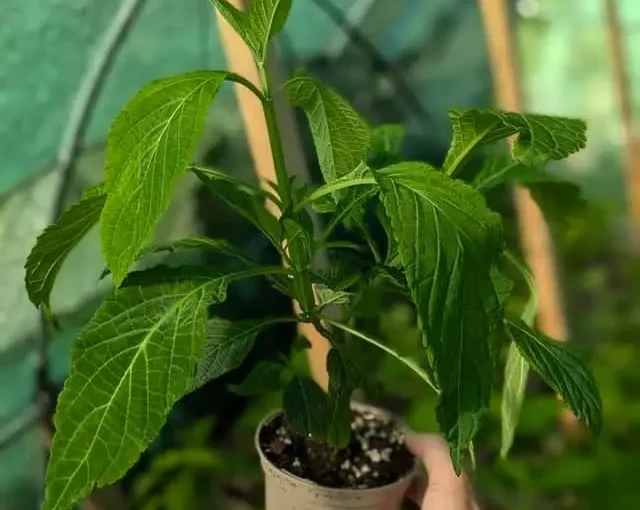
For ethnobotanical collectors and passionate home gardeners, few specimens are as rewarding—or as elusive—as Salvia divinorum. Native to the isolated, misty cloud forests of the Sierra Mazateca in Oaxaca, Mexico, this endemic perennial mint clone has fascinated researchers and plant enthusiasts for decades.
Because the plant rarely produces viable seeds in the wild or in cultivation, almost all successful propagation relies entirely on cloning. If you want to add this legendary specimen to your private greenhouse, sourcing premium, live Salvia Divinorum Cuttings with healthy, established root systems is the absolute best way to ensure long-term cultivation success.
Why Choose Live Cuttings Over Seeds?
When starting your cultivation journey, you might wonder whether to look for seeds or cloned clones. In the botanical world, Salvia Divinorum Cuttings are universally recognized as the gold standard for several critical reasons:
- The Genotype Guarantee: Because Salvia divinorum is a natural clone that struggles with genetic self-incompatibility, seeds are incredibly rare, frequently hollow, and have notoriously low germination rates. Cuttings, however, are genetic duplicates of strong, resilient mother plants.
- Rapid Establishment: A pre-rooted cutting bypasses the highly fragile seedling stage. When you receive healthy Salvia Divinorum Cuttings, they already possess the cellular infrastructure needed to absorb nutrients and push out new leaf growth immediately.
- Acclimation Resilience: Established roots provide a safety net. If the plant experiences minor stress or shock during transit, a robust root system allows it to bounce back much faster than a vulnerable, freshly cut stem.
What Makes a “Premium” Cutting?
Not all botanical vendors are equal. True ethnobotanical nurseries understand that a successful specimen requires meticulous preparation long before it is packaged. A premium cutting is defined by specific anatomical markers:
1. A Healthy, Fibrous Root System
The root system is the engine of the plant. Premium Salvia Divinorum Cuttings should features a network of white or light-tan feeder roots. Avoid specimens with mushy, dark brown, or translucent roots, as these are primary indicators of root rot caused by stagnant, over-saturated soil.
2. Thick, Square Stems
As a member of the Lamiaceae (mint) family, this plant features characteristic square, hollow stems. Look for cuttings taken from mature, semi-woody sections of the mother plant. Thicker stems store more water and carbohydrates, making them highly resilient during shipping and acclimation.
3. Vibrant, Pest-Free Foliage
The leaves should be a rich, velvety green. While some minor blemishes or leaf drop can occur during shipping due to a lack of light, the apical meristem (the top center growing tip) must be crisp, intact, and free from common greenhouse pests like spider mites, whiteflies, or fungus gnats.
Essential Care: Acclimating Your New Cuttings
When your package arrives, your new Salvia Divinorum Cuttings will have spent a few days in total darkness. Introducing them to their new home requires a gentle, step-by-step acclimation process to prevent transplant shock.
[Arrival in Dark Box] ──> [High Humidity Dome] ──> [Gradual Venting] ──> [Open Ambient Air]
(Day 0) (Days 1-5) (Days 6-10) (Day 11+)
Step 1: The Humidity Transition
Because these plants originate in humid cloud forests, they transpire rapidly. Place your newly potted cutting under a clear plastic humidity dome, a loose zip-close bag, or inside a modified clear storage tub. Aim to keep the relative humidity around 80% to 90% for the first few days.
Step 2: Selecting the Right Substrate
Use a highly porous, well-draining soil mix. A combination of premium organic potting soil, coarse perlite, and vermiculite in a 1:1:1 ratio works beautifully. This mixture retains necessary moisture while allowing oxygen to reach the roots, preventing deadly waterlogging.
Step 3: Gentle Lighting
Never place fresh Salvia Divinorum Cuttings in direct, intense sunlight. In their native habitat, they grow in the dappled understory shade of large forest canopies. Provide soft, indirect natural light or place them under a low-wattage, cool-spectrum T5 fluorescent or LED grow light set several feet away.
Step 4: Hardening Off
After 5 to 7 days, begin “hardening off” the plant. Slowly introduce fresh air by opening the vents on your humidity dome or propping open the plastic bag for an hour a day. Gradually increase the exposure over a week until the plant can stand upright in ambient room humidity without wilting.
Troubleshooting Common Growth Issues
Even with premium stock, home growers occasionally face environmental hurdles. Watch for these common signs:
- Drooping Leaves: If the soil is moist but the plant is wilting, the ambient humidity is likely too low for its current stage, or the roots are suffering from lack of oxygen. Increase humidity temporarily.
- Blackening Stem Edges: This is a classic sign of excessive moisture combined with stagnant, uncirculated air. Trim away necrotic tissue with a sterile blade, reduce watering frequency, and ensure your pot has excellent drainage holes.
- Yellowing Lower Leaves: Often a sign that the plant is hungry for nitrogen or that the soil is staying wet for too long. If the substrate is correctly damp, consider introducing a highly diluted, organic liquid fertilizer at 1/4 strength.
The Ultimate Cultivation Checklist
Before ordering your live clones, make sure you have your cultivation space fully prepared:
| Equipment Needed | Ideal Target Specification | Why It Matters |
| Pots | 4-inch to 6-inch plastic pots with ample drainage | Prevents water retention and root rot. |
| Soil Mix | Aerated blend (Soil + Perlite + Vermiculite) | Balances moisture retention with oxygenation. |
| Enclosure | Clear plastic humidity dome or propagation tent | Keeps humidity high during the critical setup phase. |
| Light Source | Indirect window light or soft LED grow lights | Prevents leaf scorching and heat stress. |
By starting with vibrant, professionally rooted Salvia Divinorum Cuttings and respecting their natural preference for shade, humidity, and airflow, you can successfully preserve and cultivate this extraordinary botanical treasure right in your own home.